
Best Electric Trucks for Kids 2026
Table of Contents
- What Makes a Great Electric Truck for Kids
- Battery Voltage and Performance: 6V, 12V, and 24V Ride-On Trucks Explained
- 24V Ride-On Trucks for Kids: Power, Speed, and Durability
- Electric Ride-On Cars for 10-Year-Olds: Size, Weight Capacity, and Control
- Kids' Electric Trucks with Parental Remote Control: Safety and Peace of Mind
- Ride-On Truck Battery Life: Runtime, Charging Time, and Real-World Performance
- Durability, Warranty, and Long-Term Value
- Frequently Asked Questions
Last Updated: October 10, 2026
What Makes a Great Electric Truck for Kids
When shopping for electric trucks for kids, the difference between a toy that gets abandoned after two weeks and one that becomes a beloved outdoor staple comes down to a few core factors. The best electric trucks for kids combine realistic design, genuine performance, and safety features that let parents relax while their child explores.
The foundation starts with voltage and motor power. A truck that moves too slowly frustrates kids; one that's too fast creates genuine safety risks. Battery capacity determines how long your child can actually play before needing a charge, claims of "8 hours" often collapse to 45 minutes in real conditions. Weight capacity matters more than most parents realize: a truck rated for 100 pounds that your 7-year-old is already approaching won't deliver the experience you're paying for.
Then there's the control question. Young children need parental oversight, which means remote control isn't optional, it's essential. The ability to take over instantly when a child heads toward the driveway or a younger sibling wanders into the path changes everything about how safely and confidently your child can play.
Finally, durability separates investments from throwaway purchases. Cheap suspension fails within months. Poor wheel design means constant flats. Weak battery connectors corrode. The trucks that hold up are built with components that can handle real outdoor use, not just showroom displays.
Battery Voltage and Performance: 6V, 12V, and 24V Ride-On Trucks Explained
Electric trucks for kids come in three voltage tiers, and the choice determines everything about performance and longevity. Understanding the differences prevents buying something that looks impressive in photos but disappoints in your driveway.
A 6V system is entry-level. These trucks move at 2-3 mph and suit toddlers aged 2-4. They're lightweight, affordable, and genuinely safe, but they're also slow enough that older kids lose interest quickly. If your child is already 5 or approaching kindergarten, a 6V truck will feel babyish within weeks.
12V systems hit the sweet spot for most families with kids aged 4-7. They deliver 4-6 mph, which feels genuinely fast to a child without being reckless. Two motors (one per rear wheel) provide better traction and handling than single-motor designs. Battery runtime typically reaches 1-2 hours per charge with realistic use. Most customers choose 12V for this age range because the performance feels "real" without requiring constant parental intervention.
24V trucks represent the premium tier. These are built for kids aged 7 and up who've demonstrated control and judgment. They reach 6-8 mph, have dual motors with genuine power, and deliver the closest experience to actually driving. The trade-off is battery drain: expect 1.5-2 hours of continuous play before needing a recharge. A 24V ride-on truck for kids also demands more careful supervision on slopes and uneven terrain.
24V Ride-On Trucks for Kids: Power, Speed, and Durability
A 24V ride-on truck for kids is the choice when you want something that grows with your child and doesn't feel like a toy. The power delivery is genuine, these vehicles have real acceleration and can handle varied terrain without bogging down.
Speed is the headline feature. At 6-8 mph, a child experiences genuine forward momentum. On flat ground with good traction, this speed feels thrilling without being dangerous if a parent is monitoring. On slopes or loose surfaces, it demands respect. The dual motors mean independent wheel control, which translates to better handling and less tipping risk than single-motor designs.
Durability at the 24V level separates premium trucks from budget alternatives. Higher voltage means heavier-gauge wiring, more strong motor components, and battery systems that can handle repeated charge cycles without degradation. Suspension becomes meaningful, a 24V truck with proper shock absorbers handles bumps and grass without jarring the child or losing traction. Wheel construction matters: solid rubber tires eliminate flats, while inflatable tires require maintenance but deliver a smoother ride.
Battery capacity on 24V systems typically ranges from 10-20 amp-hours, translating to real-world runtime of 1.5-2.5 hours depending on terrain and driving style. Charging takes 8-12 hours, which means planning evening charges for next-day play. The cost of ownership includes occasional battery maintenance, but properly cared-for 24V batteries can last 2-3 years before capacity degrades noticeably.
Electric Ride-On Cars for 10-Year-Olds: Size, Weight Capacity, and Control
As children approach 10, many parents assume they've outgrown ride-on vehicles entirely. That assumption is wrong. A properly sized electric ride-on car for a 10-year-old bridges the gap between toys and real driving in a way that builds genuine motor skills and responsibility.
The critical factor is weight capacity. A truck rated for 130 pounds that your child already weighs 110 pounds toward is running at near-maximum load. This reduces acceleration, cuts battery runtime significantly, and stresses the motor. Look for capacity ratings 40-50 pounds above your child's current weight to ensure performance doesn't degrade as they grow.
Seating position and legroom matter more than most specifications suggest. A 10-year-old with long legs will be cramped in a truck designed for 6-year-olds. Cramped seating creates fatigue, reduces control, and makes the experience feel juvenile rather than genuinely fun.
Steering response becomes important at this age. A truck with loose, unresponsive steering feels like a toy. One with tight, direct steering feels like you're actually driving something. This is the difference between a child who plays for 20 minutes and loses interest versus one who spends hours navigating obstacle courses and learning vehicle control.
Remote control shifts from essential safety tool to training mechanism. At 10, a child can handle independent driving for longer stretches, but parental override capability remains critical for driveway boundaries and emergency situations.
Kids' Electric Trucks with Parental Remote Control: Safety and Peace of Mind
Parental remote control is the feature that transforms a ride-on vehicle from a potential liability into a genuinely safe play experience. The difference between a truck with effective remote control and one without is the difference between confident supervision and constant anxiety.
A 2.4GHz wireless remote control (the standard for quality trucks) offers several advantages over older infrared systems. The signal penetrates obstacles, trees, fences, parked cars, so you maintain control even if your child drives partially out of sight.
The control scheme matters significantly. Smooth, proportional acceleration (where pressing the throttle button gradually increases speed) beats binary on-off switching. With proportional control, you can gently slow the truck by easing off the accelerator rather than slamming on the brakes, which teaches your child smoother driving habits and prevents sudden stops that feel jarring.
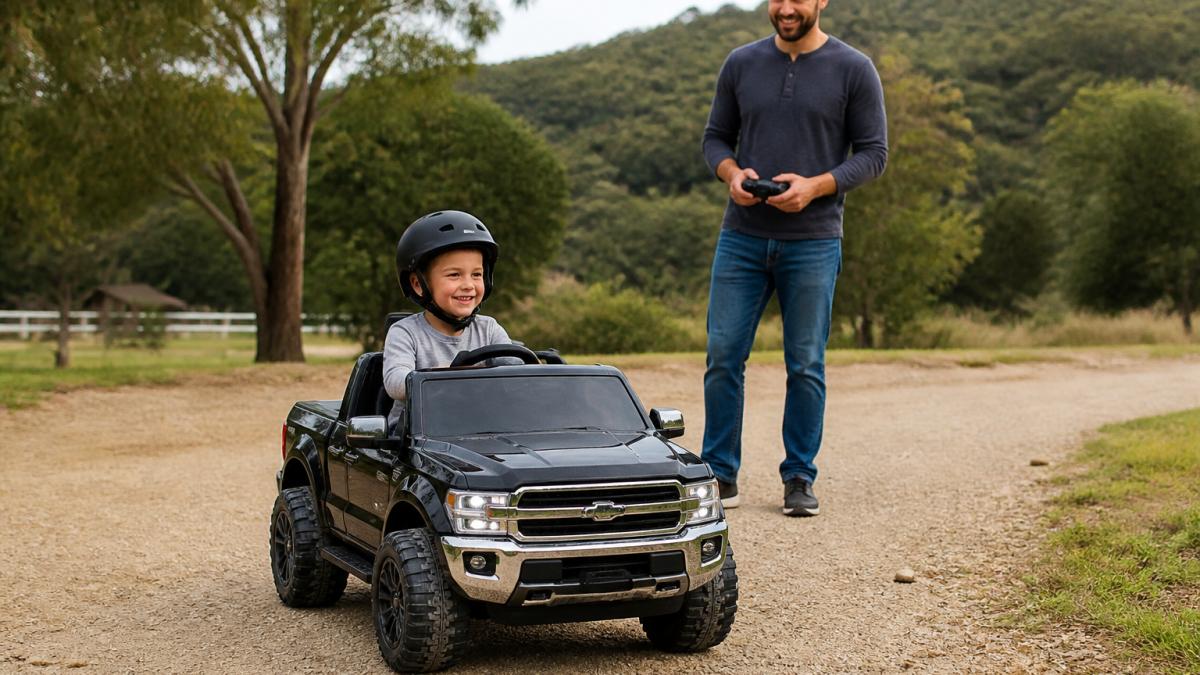
Override capability, the ability to take full control away from the child, is non-negotiable. The best systems let you regain steering and acceleration instantly if your child heads toward danger.
Battery indicator on the remote tells you when power is running low, so you're not surprised by sudden shutdown mid-play. A low-battery warning gives you time to wrap up the session before the truck loses power completely.
Ride-On Truck Battery Life: Runtime, Charging Time, and Real-World Performance
Battery specifications on product pages rarely match real-world experience. Understanding the gap between claimed and actual performance prevents frustration and helps you plan realistic play sessions.
Manufacturers often cite battery runtime under ideal conditions: flat terrain, moderate speed, optimal temperature, and a child weighing the minimum rated amount. Real conditions are messier. Grass increases drag compared to pavement. Slopes demand more power. Colder weather reduces battery efficiency. A truck rated for "8 hours" under lab conditions might deliver 1.5 hours of actual play on a typical afternoon.
A more honest assessment: expect 60-70% of claimed runtime under normal outdoor use. A 12V truck claiming 2 hours will realistically run 75-90 minutes. A 24V truck claiming 3 hours will deliver 1.5-2 hours.
Charging time ranges from 4-8 hours for smaller 12V systems to 8-12 hours for 24V trucks. Overnight charging is the practical standard. Fast chargers exist but generate heat that degrades battery lifespan, so they're worth avoiding unless you genuinely need rapid turnaround.
Battery degradation is real and predictable. Planning for battery replacement around year 3 of ownership is realistic for trucks that see regular use.
Temperature affects performance dramatically. Cold weather (below 50°F) reduces range by 20-40%. Hot weather (above 85°F) can reduce it by 10-15%. This matters if you live in a climate with seasonal extremes or play in winter conditions.
Durability, Warranty, and Long-Term Value
The trucks that hold value and continue performing after 2-3 years share common traits: strong suspension, quality wheel construction, sealed electrical connections, and components designed for actual outdoor use rather than showroom displays.
Suspension systems that matter use shock absorbers rather than simple springs. A truck with genuine shocks handles grass, gravel, and bumpy terrain without transferring every impact to the child.
Wheels determine whether you're replacing tires every season or enjoying years of trouble-free use. Solid rubber tires never go flat and require no maintenance, though they deliver a slightly rougher ride.
Electrical connections corrode when exposed to weather. The best trucks use sealed connectors and conformal coating on circuit boards to prevent moisture damage. Budget trucks often use exposed connectors that oxidize within a season, creating intermittent electrical failures that are expensive and frustrating to diagnose.
Warranty coverage reflects manufacturer confidence. A 30-day return policy is standard. Extended warranties covering parts and labor for 1-2 years suggest the manufacturer expects durability. Warranties that exclude battery and wear items are typical but less valuable than ones covering the motor and frame.
Real-world durability depends on maintenance. Regular battery charging (never leaving the truck fully discharged for weeks), occasional wheel pressure checks, and storing the truck indoors during off-season use all extend lifespan.
The best electric trucks for kids in 2026 balance initial cost with long-term reliability. A truck that costs 20% more but delivers 3 years of reliable use beats a budget option that fails after 18 months. VroomVroomToy's commitment to quality components and USA-based support means when something does go wrong, you have a reliable path to resolution.
Choosing the right electric truck for your child means balancing performance, safety, and durability against your budget and your child's age and size.
Frequently Asked Questions
What age is appropriate for an electric ride-on truck?
Most electric trucks for kids are designed for ages 3 to 8, though larger 24V models can accommodate older children up to 10 or 11 years old, depending on weight capacity and the child's comfort level. Always check the manufacturer's age and weight recommendations. Younger children (3-5) typically do better with parental remote control, while older kids benefit from independent driving with speed limiters.
Should I choose a 12V or 24V ride-on truck for my child?
A 12V ride-on truck is ideal for younger children (ages 3-6) and lighter riders, offering moderate speed and runtime. A 24V ride-on truck for kids delivers higher performance, faster acceleration, and longer battery life, making it better for older children (ages 7-10) and heavier riders. Consider your child's age, size, and riding experience when deciding between the two.
How long does a kids' electric truck battery last on a single charge?
Ride-on truck battery life typically ranges from 1 to 3 hours per charge, depending on battery voltage, motor power, terrain, and driving style. A 24V battery generally lasts longer than a 12V. Charging time usually takes 8 to 12 hours. Real-world performance can vary based on weight, speed settings, and whether the child is driving uphill or on rough terrain. Check product specifications for accurate runtime estimates.
What safety features should I look for in an electric ride-on truck?
Essential safety features include a parental remote control for speed adjustment, seat belts, shock absorbers for suspension, working headlights and taillights, and a low center of gravity for stability. Look for models with speed settings (typically 2-3 modes) so you can limit top speed as your child learns. Certification marks and durable construction also indicate a safer vehicle. Always supervise young riders and ensure they wear helmets.


