
Electric Ride-On Car Maintenance Guide
Last Updated: October 23, 2026
Quick Summary
Ride-on car maintenance involves regular battery charging for 8-12 hours, cleaning with mild soap and water, checking tire pressure monthly at 10-15 PSI, and inspecting for wear or damage. Proper care extends battery lifespan and keeps the car running safely for years of playtime.
- Charge the battery for the full 8-12 hours after each use at temperatures between 50°F and 85°F
- Check tire pressure monthly and rotate tires every 50 hours of playtime if wheels are removable
- Clean the car every few weeks with mild soap and soft cloth, never using pressure washers or harsh chemicals
- Store the car indoors in cool, dry conditions between 50-75°F and charge the battery for 2-3 hours monthly during off-season
- Replace the battery immediately if you notice shorter playtime, slow acceleration, swollen case, or burning smell
Table of Contents
- What You'll Need Before Starting Maintenance
- Ride-On Car Battery Maintenance: Charging and Care
- Electric Ride-On Car Troubleshooting: Common Issues and Fixes
- How to Clean a Kids' Electric Ride-On Car
- Tire and Wheel Maintenance for Your Ride-On Car
- Electric Ride-On Car Storage: Preparing for Off-Season
- Common Maintenance Mistakes to Avoid
- Frequently Asked Questions
What You'll Need Before Starting Maintenance
Getting your child's electric ride-on car ready for playtime starts with having the right tools on hand for ride-on car maintenance.
Gather these essentials before you begin:
- Soft microfiber cloths (for cleaning without scratching)
- Mild soap and warm water (avoid harsh chemicals)
- Dry towels or chamois cloth
Keep these items in a small bin near where you store the car. This makes maintenance quick and hassle-free when you need it.
We recommend checking your maintenance supplies at the start of each season. A few minutes of prep now saves frustration later.
Ride-On Car Battery Maintenance: Charging and Care
The battery is the heart of your child's electric ride-on car. Proper care keeps it running strong and extends its lifespan significantly.

How to Charge Your Ride-On Car Battery Properly
Charge your ride-on car correctly, and the battery will reward you with consistent performance. Many ride-on car batteries need 8-12 hours of charging time after each use.
Follow these steps every time:
- Unplug the car from any power source before connecting the charger
- Locate the charging port (usually on the side or rear of the vehicle)
- Connect the charger slowly and firmly until you hear or feel it click
- Plug the charger into a wall outlet, use a standard 110V outlet, never an extension cord
- Let it charge fully, most chargers have a light that turns green when done
- Unplug the charger first, then disconnect from the car
- Store the charger in a cool, dry location
Never leave the charger plugged in longer than recommended. Overcharging can damage battery cells and reduce how long they last.
Signs Your Battery Needs Replacement
A failing battery shows clear warning signs. Watch for these red flags:
- Shorter playtime, your child's rides end much sooner than before
- Slow acceleration, the car takes longer to reach full speed
- Difficulty holding a charge, the battery drains even when the car isn't in use
If you notice any of these, replace the battery right away. A failing battery is a safety issue and won't improve with charging.
Electric Ride-On Car Troubleshooting: Common Issues and Fixes
Most problems with ride-on cars have simple solutions. Work through these troubleshooting steps before assuming something is broken.

Car Won't Start or Respond to Controls
Your child presses the pedal, but nothing happens. This is frustrating, but it's usually fixable.
Start here:
- Check the battery charge, plug in the charger and wait 2-3 hours, then try again
- Inspect the power switch, make sure it's in the ON position (look for a toggle or button near the steering wheel)
- Test the emergency stop button, if it's been pressed, the car won't respond; release it and try again
- Look at the battery terminals, open the battery compartment and check that the red and black wires are firmly connected
- Wiggle the charger connection, sometimes a loose charging port prevents full power delivery
If the car still won't start after these checks, the battery may need replacement or a wire connection inside may be loose. Contact our support team for assistance.
Reduced Speed or Power Loss
The car moves, but it's slower than usual or loses power halfway through a ride.
Try these fixes:
- Recharge the battery fully, partial charges cause power loss
- Clean the battery terminals, dirt and corrosion block power flow; use a dry cloth to wipe both the red and black connections
- Check tire pressure, low tires make the motor work harder and drain the battery faster
- Reduce the load, if your child has added toys or cargo, remove them; most ride-ons have a maximum weight limit
If the car still runs slowly after a full charge and these steps, the battery is aging and needs replacement.
Remote Control Not Working
The parental remote won't respond, or it only works from very close range.
Check these things first:
- Replace the remote batteries, most use AA or AAA batteries that wear out
- Move closer to the car, start within 10 feet to test range
- Clear obstacles, walls, metal objects, and other electronics interfere with the 2.4GHz signal
- Re-pair the remote, turn off the car, press and hold the pairing button on the remote for 5 seconds, then turn the car back on
If the remote still won't work after these steps, the receiver inside the car may be damaged. Our support team can help you determine if replacement is needed.
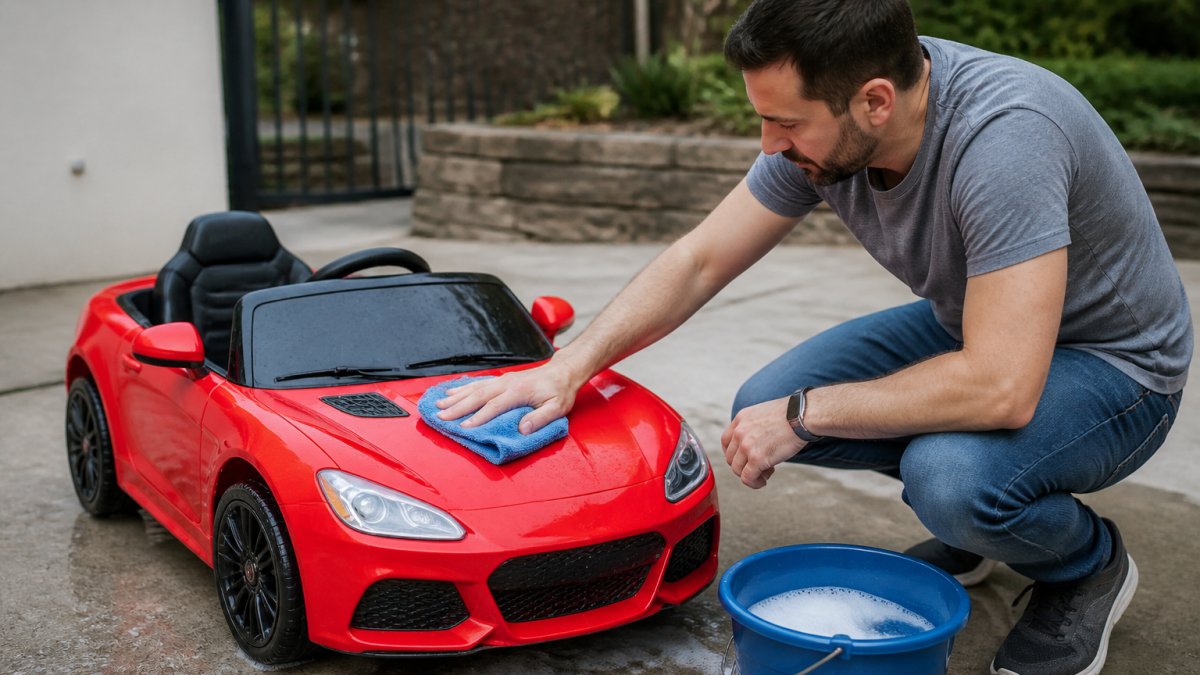
How to Clean a Kids' Electric Ride-On Car
Regular cleaning keeps your ride-on car looking new and prevents dirt from damaging moving parts. A quick wash every few weeks is all it takes.
Exterior Cleaning Steps
The outside takes the most abuse from outdoor play. Clean it properly to protect the paint and plastic.
Here's the process:
- Rinse with a hose, use low pressure to remove loose dirt and grass
- Mix mild soap and warm water in a bucket
- Scrub with a soft cloth, work in small sections, paying attention to wheel wells and crevices
- Rinse thoroughly with clean water, soap residue attracts dirt
- Dry completely with a chamois cloth or towel, standing water can seep into electrical components
- Clean the wheels with an old toothbrush to remove caked-on mud
- Wipe down the windshield (if equipped) with a microfiber cloth
Never use a pressure washer or hose on high pressure. Water forced into seams can damage the battery or electrical system.
Interior and Electrical Component Care
The inside of the car is where water causes the most damage. Protect it carefully.
Follow these guidelines:
- Keep the battery compartment dry, wipe it with a dry cloth after any cleaning
- Don't spray water directly at the steering wheel, pedals, or control buttons
- Use a damp cloth only for the dashboard and interior surfaces
- Never submerge the car or let water sit inside
If water gets inside the battery compartment, open it immediately and dry everything with a clean cloth. Leave it open to air dry for several hours before using the car again.
Tire and Wheel Maintenance for Your Ride-On Car
Tires and wheels take a beating during outdoor play. Regular checks keep rides smooth and safe.
Check tire pressure once a month using a tire pressure gauge. Many ride-on cars need 10-15 PSI (pounds per square inch), check your manual for the exact number.

Look for visible damage like cracks, cuts, or uneven wear. If a tire is damaged, it needs replacement.
Clean the wheels weekly to prevent mud buildup. Mud adds weight and makes the motor work harder.
Check that wheel bolts are tight. Over time, vibration can loosen them.
Electric Ride-On Car Storage: Preparing for Off-Season
When winter comes or you're storing the car for a few months, proper preparation prevents damage and keeps everything ready for next season.
Pre-Storage Checklist
Before you put the car away, complete these steps:
- Clean the entire car inside and out
- Charge the battery fully one last time
- Check all bolts and screws for tightness
- Inspect tires for damage or low pressure
Ideal Storage Conditions
Where you store the car matters just as much as how you prepare it.
Store your ride-on car in these conditions:
- Indoors, a garage, shed, or basement protects it from weather
- Cool and dry, avoid damp basements or hot attics; aim for 50-75°F
- Away from direct sunlight, UV rays fade paint and can warp plastic
- On a level surface, this prevents stress on the frame and suspension
Check on the car every month during storage. Charge the battery for 2-3 hours to keep it from fully draining. A completely dead battery can become damaged and won't hold a charge when you try to use it again.
Common Maintenance Mistakes to Avoid
Learning what NOT to do saves time and money. These mistakes damage ride-on cars and shorten their lifespan.
Using the wrong charger. Never use a charger from a different car or a generic charger.
Charging in extreme weather. Charging in freezing cold or intense heat damages battery cells.
Ignoring water inside the battery compartment. If water gets in, dry it immediately.
Using harsh chemicals or pressure washers. These damage the plastic, strip paint, and force water into electrical components.
Keeping your child's electric ride-on car in top shape through proper ride-on car maintenance doesn't require special skills or expensive tools. Start with the maintenance routine in this guide, and your investment will keep your child smiling for seasons to come. Shop VroomVroomToy's premium ride-on cars today and give your little driver a vehicle built to last.
Frequently Asked Questions
How often should you maintain an electric ride-on car?
Perform basic checks before each use: inspect the battery charge level, test the remote control, and ensure tires look properly inflated. Run a full maintenance routine every 2-4 weeks during active play season, including battery inspection, wheel checks, and exterior cleaning. If your child uses the car frequently (several times per week), monthly maintenance is ideal. During off-season storage, check the battery charge every 2-3 months to prevent deep discharge.
How do you charge and care for a ride-on car battery?
Always use the charger supplied with your VroomVroomToy electric ride-on car. Charge the 12V battery fully before the first use and after each play session. Avoid overcharging, many rides take 8-12 hours to charge completely. Never leave the battery charging overnight repeatedly. Store the battery in a cool, dry location away from extreme heat or cold. Check battery terminals monthly for corrosion. If your child's car sits unused for more than a month, charge the battery every 2-3 months to maintain health and prevent permanent damage.
How can you tell if a ride-on car battery needs replacing?
Watch for reduced runtime: if your VroomVroomToy car that normally runs 40-60 minutes now quits after 15-20 minutes, the battery is fading. The car may also start slowly or struggle to reach full speed. If the battery no longer holds a charge after a full 8-12 hour charging session, replacement is necessary. Inspect battery terminals for heavy corrosion or damage. If the car won't start at all despite proper charging and all other systems work, the battery has likely failed and needs replacement.
Can an electric ride-on car be stored in a garage or shed?
Yes, a garage or shed is an ideal storage location for your electric ride-on car during off-season months. Choose a spot that stays between 50-80°F and away from direct sunlight, which can fade the plastic and damage the battery. Ensure the space is dry, moisture promotes rust and electrical corrosion. Avoid storing near heaters, air conditioners, or damp areas. Before storage, fully charge the battery, clean the car thoroughly, and cover it with a breathable tarp to protect from dust. Check on the car every 2-3 months and recharge the battery to prevent deep discharge.


