
How to Safely Supervise Toddler Ride-On Cars
Table of Contents
- Understanding Ride-On Car Age and Weight Limits
- Pre-Ride Inspection: Essential Safety Checks
- Electric Ride-On Car Safety Tips for Daily Use
- Using Parental Remote Control Ride-On Cars Effectively
- How to Teach a Toddler to Drive a Ride-On Car Safely
- Emergency Response and Incident Prevention
- Maintenance and Regular Safety Checks
- Frequently Asked Questions
Last Updated: October 21, 2026
Understanding Ride-On Car Age and Weight Limits
To supervise toddler ride-on cars effectively, start before your child sits behind the wheel by picking a vehicle that matches their size and development stage.
Age-Appropriate Selection
Children under 3 typically lack the coordination and impulse control to operate even a parental-remote vehicle safely. Most manufacturers recommend starting at age 3, when kids develop better balance and can follow simple instructions.
At VroomVroomToy, we recommend matching the vehicle to your child's developmental stage, not just their birthday.
By age 5 or 6, many children can transition to more independent driving. Readiness varies, though: watch how your child handles a tricycle or balance bike first. If they're cautious and responsive to your voice commands, they're likely ready.
Weight Capacity Matters
Every ride-on vehicle has a maximum weight limit, and it's a safety issue, not just performance. Exceeding it stresses the motor, reduces braking effectiveness, and can cause tipping on turns.
The VroomVroomToy RR, for example, supports children up to 66 lbs (30 kg), making it ideal for kids ages 3-8. The JP truck handles up to 44 lbs (20 kg), which fits younger toddlers and smaller 4-year-olds. Check your child's weight against the manufacturer's specifications before purchase.

Kids grow fast: a vehicle that fits at age 4 may feel cramped at 7. Some families buy a smaller model first, then upgrade as their child grows.
| Vehicle Model | Max Weight | Recommended Age | Best For |
|---|---|---|---|
| VroomVroomToy RR | 66 lbs (30 kg) | 3-8 years | Toddlers and younger kids |
| VroomVroomToy JP | 44 lbs (20 kg) | 3-10 years | Smaller toddlers, lighter kids |
| VroomVroomToy MC | 55 lbs (25 kg) | 3-8 years | Mid-sized kids, sports car lovers |
| VroomVroomToy PD | 66 lbs (30 kg) | 3-8 years | Kids who love police vehicles |
Pre-Ride Inspection: Essential Safety Checks
Before every ride, inspect your ride-on car. This 5-minute check catches problems like a loose bolt or worn brake before they cause an accident.
Structural and Mechanical Components
Start with the frame and body. Look for cracks or loose panels, which can break further and create sharp edges.
Next, spin each wheel by hand. They should rotate smoothly without grinding or wobbling.
Test the brakes. Press the foot pedal firmly; it should feel responsive and stop the wheels from spinning freely.
Check the steering. Turn the wheel left and right; it should move smoothly and the wheels should respond immediately. Listen for grinding or clicking, which indicate worn components.
Examine the seat and seatbelt. The seat should be secure and not wobble; the seatbelt should click firmly into place and hold without slipping.
Electrical and Battery Safety
Electric ride-on cars depend on their battery and electrical system. A dead battery ruins playtime; a faulty connection creates safety risks.
Check the battery charge before each ride. A full charge should last 40-60 minutes of active riding. Faster draining may mean a failing battery.
Inspect the charging port and cable for corrosion, loose connections, or damaged insulation.
Test all lights and sounds before riding.
Listen to the motor when you power on. A normal motor hums smoothly; grinding, squealing, or stuttering means something is wrong. Don't let your child ride until you've identified the problem.
Electric Ride-On Car Safety Tips for Daily Use
Once your child is ready to ride, daily safety practices protect them from injury. Supervision is your most powerful tool: nothing replaces an attentive adult watching constantly.
Protective Gear and Restraints
A helmet is non-negotiable. Even at low speeds (2-4 mph), a fall can cause head injury.
Knee pads and elbow pads reduce scrapes and bruises. Kids fall off ride-on cars; pads won't prevent every injury, but they soften impact and protect growing joints.
The seatbelt keeps your child centered and reduces the risk of falling out during sharp turns or sudden stops.
Dress your child in long pants and closed-toe shoes. Loose clothing can catch on moving parts. Sandals or bare feet leave skin exposed to scrapes and burns from hot metal parts.
Safe Riding Boundaries and Surfaces
Choose a flat, smooth surface: driveways, patios, and parking lots work well. Avoid grass, gravel, and dirt, which increase tipping risk and make steering unpredictable.
Mark clear boundaries with cones, chalk lines, or rope, and teach your child not to cross them. Consistent boundaries keep them away from traffic, water, and hazardous areas.
Inspect the surface before each session and remove toys, rocks, sticks, and debris; even a small object can catch a wheel and tip the vehicle. Avoid riding after rain until the surface dries.
Keep ride-on car play away from:
- Driveways with slopes or hills
- Areas near traffic or parked cars
- Pools, ponds, or bodies of water
- Stairs or elevated surfaces
- Crowded areas with pedestrians
Using Parental Remote Control Ride-On Cars Effectively
The 2.4GHz parental remote control is your safety backup. It lets you take control instantly if your child loses focus or heads toward danger. Understanding how to use it properly is essential.
Mastering the 2.4GHz Remote
The remote pairs wirelessly with your vehicle using 2.4GHz frequency. This frequency is standard for many toys and consumer devices, so interference is rare.
Test the remote before your child rides. Check that steering, acceleration, and braking all respond immediately. If the remote feels sluggish or unresponsive, the batteries may be low.
Keep the remote in your hand at all times while your child rides. Don't set it down or hand it to another adult who might not be paying attention.
Practice using the remote before your child needs you to. Take a few minutes to steer the car left and right, speed up, and brake.
Speed Settings and Override Scenarios
Most VroomVroomToy vehicles offer multiple speed settings. Low speed (typically 2-3 mph) is ideal for young toddlers and first-time riders. Medium speed (3-4 mph) suits more experienced kids.
Start every new rider in low speed mode. Let them get comfortable with steering and pedal control.
Use the override function when your child heads toward danger. If they're steering toward a parked car, the edge of a driveway, or a pedestrian, take control immediately.
The emergency stop button brings the vehicle to a complete halt instantly. Use it only in true emergencies, when your child is heading toward traffic, a steep drop, or another immediate hazard.
How to Teach a Toddler to Drive a Ride-On Car Safely
Teaching your child to operate a ride-on car is a gradual process. Rushing this progression leads to accidents and frustration. A slow, patient approach builds confidence and safe habits.
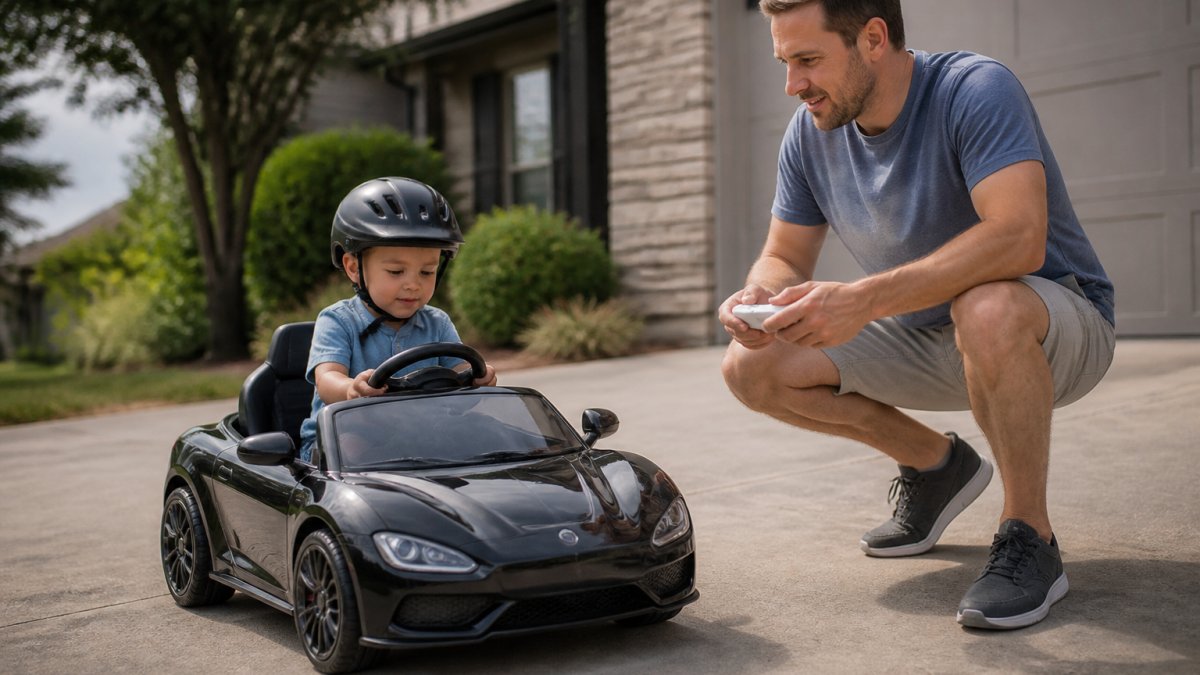
Starting with Parental Control Mode
Begin with the parental remote in full control. Your child sits in the driver's seat and holds the steering wheel, but you operate the pedals and steering from the remote.
Ride for short sessions, 10 to 15 minutes at a time. Young children tire quickly and lose focus. Shorter rides keep them engaged and reduce the risk of fatigue-related mistakes.
Talk to your child constantly. Explain what's happening: "We're turning left now. Feel how the car leans?" Narrate your actions so your child learns to predict what comes next.
After 3-5 sessions in full remote mode, introduce steering control. Let your child steer while you control speed and braking.
Progression to Independent Driving
Once your child steers confidently, introduce pedal control. Let them control the acceleration while you hold the remote ready to brake. Expect jerky acceleration and occasional over-pedaling. This is normal.
Practice stopping. Have your child press the brake pedal while you're in remote control. They need to understand that braking stops the car and takes effort. Praise every smooth stop.
After several sessions with shared control, try full independent driving in low speed mode. Stay close and keep the remote ready.
Watch for these signs of readiness:
- Smooth, predictable steering without overcorrecting
- Appropriate use of the brake pedal
- Ability to follow verbal instructions ("Turn left at the cone")
- Calm, focused behavior (not reckless or distracted)
- Understanding of boundaries and stopping points
Never rush progression. A child who's not ready for independent driving isn't being cautious, they're being safe.
Emergency Response and Incident Prevention
Accidents happen. Knowing how to respond minimizes injury and prevents panic.
If your child falls off the ride-on car, stay calm. Check for obvious injuries, bleeding, limb deformity, or loss of consciousness. If your child is conscious and responsive, help them sit up slowly.
Minor scrapes and bruises are part of learning. Clean the wound, apply antiseptic, and cover it if needed. Reassure your child that they're okay and that falls are part of riding.
For serious injuries, head impact, severe bleeding, suspected fractures, or loss of consciousness, call emergency services immediately. Don't move your child unnecessarily. Keep them calm and still until help arrives.
Prevent incidents by:
- Maintaining constant visual supervision
- Keeping the riding area clear of hazards
- Enforcing speed limits appropriate to your child's skill level
- Stopping rides if your child is tired, upset, or distracted
- Never allowing riding near traffic, water, or steep slopes
- Checking weather, wet or icy conditions increase accident risk
Maintenance and Regular Safety Checks
A well-maintained ride-on car is a safe ride-on car. Monthly maintenance prevents breakdowns and extends the vehicle's life.
Check the battery monthly. Clean any corrosion from the battery terminals with a dry cloth.
Inspect all moving parts quarterly. Spin the wheels, test the brakes, and check the steering. Tighten any loose bolts or screws.
Clean the vehicle regularly. Dirt and debris accumulate in crevices and can damage electrical connections.
Store the vehicle indoors when not in use. Rain, snow, and extreme temperatures damage batteries and corrode metal parts.
Teaching your child to supervise toddler ride-on cars safely requires patience, attention, and the right equipment.
Frequently Asked Questions
What age is appropriate for a toddler to use an electric ride-on car?
Most electric ride-on cars are designed for children ages 3 and up, though some models accommodate children up to age 10. Always check the manufacturer's age recommendation before purchasing. A 3-year-old can typically handle a ride-on car with parental remote control, while 5- to 8-year-olds may progress to more independent driving with close supervision. Consider your child's coordination, ability to follow instructions, and comfort level before allowing independent operation.
How closely should you supervise a toddler on a ride-on car?
For children ages 3-5, maintain constant visual supervision within arm's reach at all times. Keep the parental remote control in hand and stay alert for obstacles, other children, or sudden changes in terrain. For ages 6-8, you can increase distance slightly if riding on a flat, enclosed driveway, but never leave your child unattended. Watch for signs of fatigue, loss of control, or distraction. Supervision means active attention, not simply being nearby.
Should toddlers wear a helmet on an electric ride-on car?
Yes, a properly fitted helmet is essential safety equipment for any child riding an electric ride-on car, regardless of speed. Even low-speed vehicles (2-4 MPH) can cause head injuries if a child falls or loses balance. Choose a helmet that meets CPSC standards, fits snugly without gaps, and is age-appropriate. A helmet significantly reduces the risk of serious head injury and reinforces safe riding habits from an early age.
What safety features should parents look for in a toddler ride-on car?
Prioritize parental remote control with emergency stop capability, a secure seatbelt system, adjustable speed settings, and sturdy construction. Look for shock absorbers or suspension for smoother rides on uneven surfaces, locking doors, and non-slip tires for traction. Soft-start technology prevents sudden acceleration jolts. LED lights improve visibility, and a portable carry handle helps you move the vehicle when the battery is depleted. The VroomVroomToy RR and JP models include most of these features, with the JP truck offering dual motors and 3-point seatbelts for added security.


